
Table of Contents
ToggleFamily games tips can transform an ordinary evening into a memorable bonding experience. Game nights bring parents, children, and even grandparents together around a shared activity. But let’s be honest, these gatherings don’t always go smoothly. Someone gets bored. A toddler flips the board. Teenagers check their phones. The wrong game choice can turn fun into frustration in minutes.
The good news? A few simple strategies can help families avoid common pitfalls and create game nights that everyone actually enjoys. This guide covers practical family games tips that work for households with mixed ages, different skill levels, and varying attention spans. Whether the goal is more laughter, less arguing, or simply quality time together, these tips will help.
Key Takeaways
- Choose age-appropriate games that match the youngest player’s ability while keeping older family members engaged.
- Set clear rules and behavior expectations before playing to prevent mid-game arguments and frustrations.
- Create a distraction-free environment by turning off TVs, putting away phones, and ensuring comfortable seating for all ages.
- Model good sportsmanship by praising effort and strategy rather than just celebrating wins.
- Match game session length to the youngest player’s attention span—roughly their age in minutes plus ten.
- Consider cooperative games for mixed-age groups so everyone works together toward a shared goal.
Choose Age-Appropriate Games for All Players
The first and most important of all family games tips is picking the right game for the group. A game that’s too complex will frustrate younger players. One that’s too simple will bore older kids and adults.
Start by looking at the age range on the box. Most games include a recommended minimum age. But, families should also consider individual abilities. A bright six-year-old might handle a game rated for ages eight and up, while some adults struggle with abstract strategy games.
For mixed-age groups, cooperative games often work best. Titles like Outfoxed. or Forbidden Island let players work together instead of competing directly. This setup allows older family members to guide younger ones without making the experience feel like a tutorial.
Another option is choosing games with adjustable difficulty. Many modern games include beginner and advanced rules. Families can start simple and add complexity as younger players grow comfortable.
Some reliable choices for multi-generational game nights include:
- Card games like Uno or Sleeping Queens (quick to learn, fast-paced)
- Cooperative games where everyone wins or loses together
- Party games like Pictionary or charades that rely on creativity over strategy
- Classic board games with simple rules like Sorry. or Candy Land for very young children
The key is matching the game to the youngest player’s ability while keeping older players engaged. Family games tips like this one prevent meltdowns before they start.
Set Clear Rules and Expectations Before Playing
Nothing derails a game night faster than mid-game arguments about rules. Smart families read the instructions together before anyone rolls a die or draws a card.
One effective approach is designating a “rule reader.” This person reviews the instructions and explains them to the group in plain language. They also serve as the final authority on disputes. Having this role assigned ahead of time reduces conflict.
For younger children, keep explanations short. Focus on what they need to know to take a turn. They’ll pick up finer points as the game progresses.
Behavior expectations matter just as much as game rules. Before starting, families should agree on basics:
- No phones at the table (or during turns, at minimum)
- Losing gracefully without tantrums or sulking
- Winning gracefully without gloating
- Taking turns without rushing other players
These family games tips about expectations might feel unnecessary, but they prevent most common problems. When a five-year-old knows ahead of time that throwing pieces means the game ends, they’re less likely to throw pieces.
For competitive families, consider adding a “fun first” rule. If anyone stops having fun, the group takes a break or switches games. This gives everyone permission to speak up before frustration boils over.
Create a Comfortable and Distraction-Free Environment
The right setting makes family game nights more enjoyable. A few adjustments to the environment can improve focus and mood for all ages.
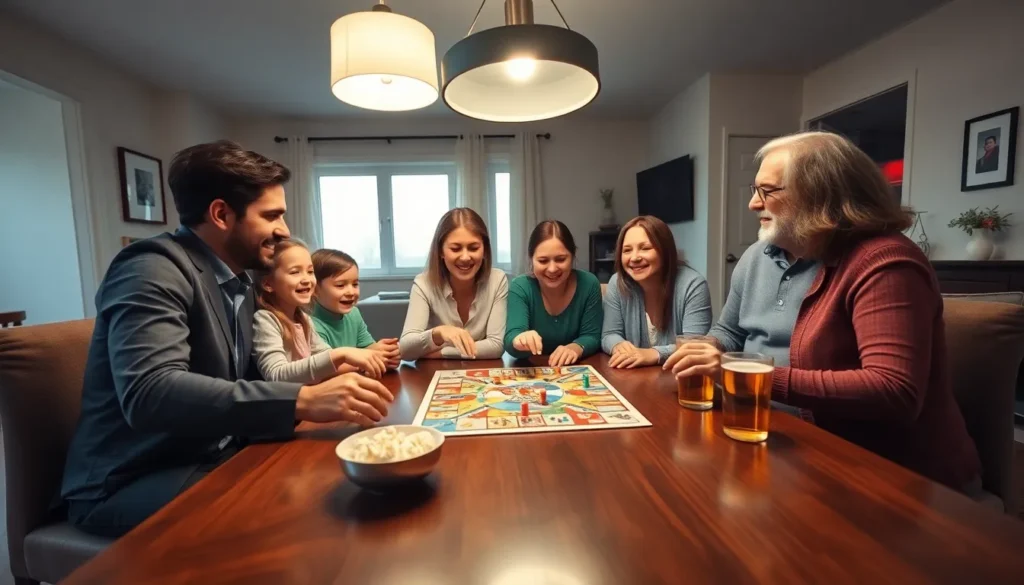
First, pick a good location. The dining room table works well for most families. It offers enough space for boards, cards, and pieces. Everyone can sit comfortably and reach the playing area.
Lighting matters more than people realize. Dim rooms cause eye strain during long games. Bright overhead lights can feel harsh. Aim for balanced, comfortable lighting that makes it easy to read cards and see small pieces.
Remove distractions before starting. Turn off the television. Put phones in another room or in a basket. Close laptops. These family games tips about environment might seem strict, but they protect the quality time families are trying to create.
Comfort counts too. Make sure chairs are the right height for all players. Smaller children may need a booster seat to reach the table. Have drinks and snacks ready so no one needs to get up constantly.
Some families add special touches to make game night feel like an event:
- A designated game night snack (popcorn, nachos, or a treat)
- Background music at low volume
- A rotating “host” who picks the game each week
These small rituals build anticipation and make game nights something the whole family looks forward to.
Encourage Good Sportsmanship and Teamwork
Winning feels great. Losing? Not so much. One of the most valuable family games tips is teaching children (and sometimes adults) how to handle both outcomes with grace.
Good sportsmanship starts with modeling. When parents lose, they should show how to react positively. A simple “Great game. You really got me that time” teaches more than any lecture.
Praise effort and strategy, not just victory. Comments like “That was a clever move” or “You’re getting better at this” help players feel valued regardless of the final score.
For younger children, competitive games can feel overwhelming. They may lack the emotional regulation to handle losses. Cooperative games offer a solution. When everyone works toward a shared goal, there’s no individual loser. The family either wins together or loses together, and either outcome creates connection.
Teamwork games also build communication skills. Players must share ideas, listen to others, and make group decisions. These abilities transfer to life outside game night.
Some families use a “winner picks next” rule. This gives the previous winner a reward that doesn’t involve gloating. It also motivates players who might otherwise disengage after a loss.
If a child struggles with losing, don’t abandon competitive games entirely. Instead, start with low-stakes games where luck plays a bigger role than skill. Dice-based games or simple card games help children experience losing without feeling outplayed.
Keep Game Sessions the Right Length
Long games can exhaust young children and test adult patience. Short games may leave older players unsatisfied. Finding the right length is essential.
Pay attention to attention spans. A good rule: match game length to the youngest player’s age in minutes, then add ten. A four-year-old can typically handle 15-20 minutes. A ten-year-old might stay engaged for 40 minutes or more.
Check the estimated playtime on the box. Many games list this on the packaging. Remember that learning a new game often takes longer than the listed time suggests.
Family games tips for managing length include:
- Start with shorter games and work up to longer ones as the evening progresses
- Set a timer for games without a natural endpoint
- Take breaks during longer games, a five-minute snack break refreshes everyone
- End on a high note rather than pushing until someone gets cranky
It’s okay to stop a game before it finishes. If energy is dropping or frustration is rising, call it. The point is connection, not completion.
For families with widely mixed ages, consider a “shift” approach. Younger children play earlier, easier games, then head to bed. Older kids and adults can follow with a more complex game afterward. This way, everyone participates in at least one round.


