
Table of Contents
ToggleReading and literacy development for beginners starts with understanding how children learn to decode words and build comprehension. Parents, caregivers, and educators play a critical role in this process. Early literacy skills form the foundation for academic success and lifelong learning. This guide covers the key stages of literacy development, essential phonics skills, practical home strategies, and how to spot common reading challenges. Whether a child is just starting to recognize letters or beginning to read simple sentences, these insights will help support their journey toward confident reading.
Key Takeaways
- Reading and literacy development for beginners follows five predictable stages, from pre-reading (ages 0–5) to fluent reading (ages 8+).
- Phonemic awareness—the ability to hear and manipulate individual sounds—is one of the strongest predictors of reading success.
- Reading aloud for just 15–20 minutes daily builds vocabulary, listening comprehension, and a love of books in young readers.
- Let children choose their own books, including comics and graphic novels, to boost motivation and build lasting reading habits.
- Watch for early warning signs like difficulty rhyming, trouble recognizing letters, or avoiding reading activities—and seek support promptly.
- Evidence-based interventions focusing on phonics, fluency, and comprehension help struggling readers make meaningful progress when started early.
Understanding the Stages of Early Literacy
Reading and literacy development follows a predictable sequence. Most children progress through five main stages before becoming fluent readers.
Pre-Reading Stage (Ages 0–5)
During this stage, children develop print awareness. They learn that books have a front and back, that text runs left to right, and that words on a page carry meaning. Exposure to books, songs, and conversations builds vocabulary and listening skills.
Emergent Reading Stage (Ages 4–6)
Children begin recognizing letters and understanding that letters represent sounds. They may pretend to read by memorizing familiar stories or using picture cues. This stage marks the start of phonemic awareness, the ability to hear and manipulate individual sounds in words.
Early Reading Stage (Ages 5–7)
At this point, children start decoding simple words by sounding them out. They recognize common sight words and can read short sentences with support. Reading still requires significant effort, and comprehension may lag behind decoding ability.
Transitional Reading Stage (Ages 6–8)
Readers become more automatic with decoding. They read longer texts, handle multi-syllable words, and start reading silently. Comprehension improves as children focus less on sounding out words and more on understanding meaning.
Fluent Reading Stage (Ages 8+)
Fluent readers recognize most words instantly. They read with expression, adjust their pace based on text difficulty, and use reading as a tool to learn new information. Reading and literacy development continues even at this stage, as vocabulary and comprehension deepen over time.
Building Phonemic Awareness and Phonics Skills
Phonemic awareness and phonics form the core of early reading instruction. These skills allow children to connect spoken language with written text.
What Is Phonemic Awareness?
Phonemic awareness refers to the ability to hear, identify, and manipulate individual sounds (phonemes) in spoken words. For example, a child with phonemic awareness can break the word “cat” into three sounds: /k/, /a/, /t/. Research shows that phonemic awareness is one of the strongest predictors of reading success.
Activities that build phonemic awareness include:
- Rhyming games (What rhymes with “hat”?)
- Sound segmentation (How many sounds in “ship”?)
- Blending practice (What word do /b/, /i/, /g/ make?)
- Sound substitution (Change the /m/ in “mat” to /s/, what word do you get?)
What Is Phonics?
Phonics teaches the relationship between letters (graphemes) and sounds (phonemes). While phonemic awareness focuses on sounds alone, phonics connects those sounds to written symbols. Systematic phonics instruction introduces letter-sound relationships in a logical order, building from simple to complex patterns.
Effective phonics instruction covers:
- Single consonant and vowel sounds
- Consonant blends (bl, st, cr)
- Digraphs (sh, ch, th)
- Long vowel patterns (silent e, vowel teams)
- R-controlled vowels (ar, er, ir, or, ur)
Children benefit most when phonemic awareness and phonics instruction happen together. Reading and literacy development accelerates when learners can both hear sounds and see how those sounds appear in print.
Strategies to Encourage Reading at Home
Parents and caregivers have a powerful influence on reading and literacy development. Simple daily habits can make a big difference.
Read Aloud Every Day
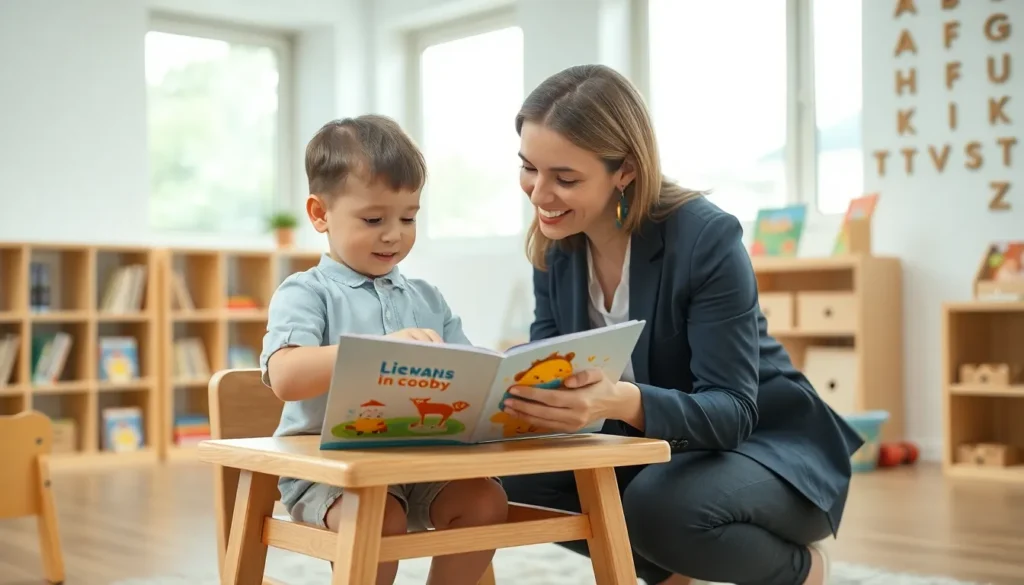
Reading aloud exposes children to vocabulary, sentence structure, and story patterns they won’t encounter in everyday conversation. Even 15–20 minutes daily builds listening comprehension and a love of books. Ask questions during reading: “What do you think will happen next?” or “How do you think the character feels?”
Create a Print-Rich Environment
Surround children with books, labels, and written materials. Label items around the house. Keep books accessible, on low shelves, in baskets, or by the bed. When children see print everywhere, they understand that reading matters.
Let Children Choose Their Books
Interest drives motivation. Allow children to pick books that excite them, even if those books seem too easy or unconventional. Comic books, graphic novels, and nonfiction about dinosaurs all count as reading. The goal is building a habit.
Practice Patience with Beginning Readers
Early readers need time to sound out words. Resist the urge to jump in too quickly. Give children space to work through unfamiliar words. Offer gentle hints like “What sound does that letter make?” rather than supplying the word immediately.
Make Reading Interactive
Point to words as you read. Have children find specific letters or words on the page. Play word games during car rides or at the dinner table. These small interactions reinforce reading and literacy development in natural, low-pressure ways.
Recognizing and Addressing Common Reading Challenges
Not all children follow the same reading timeline. Recognizing struggles early allows for timely intervention.
Signs of Reading Difficulty
Watch for these warning signs:
- Difficulty rhyming words by age 4–5
- Trouble recognizing letters or their sounds by kindergarten
- Frequent guessing based on pictures rather than decoding
- Avoiding reading activities or expressing frustration
- Slow progress even though consistent instruction
- Reversing letters (b/d, p/q) past age 7
- Poor spelling that doesn’t improve with practice
These signs don’t automatically indicate a learning disability, but they do suggest a child needs extra support.
Common Reading Challenges
Several conditions can affect reading and literacy development:
- Dyslexia: A language-based learning difference that affects decoding, spelling, and word recognition. Children with dyslexia often have strong verbal skills but struggle with written text.
- Processing speed issues: Some children decode accurately but read very slowly, which affects comprehension and stamina.
- Language delays: Limited vocabulary or grammar skills can make reading comprehension difficult even when decoding is strong.
What to Do If You Suspect a Problem
Speak with the child’s teacher first. Schools often conduct screenings and can recommend further evaluation. A formal assessment by a reading specialist or psychologist can identify specific needs.
Evidence-based interventions work. Structured literacy programs that emphasize phonemic awareness, phonics, fluency, vocabulary, and comprehension help struggling readers make progress. Early intervention produces the best outcomes, waiting rarely helps.


